Metal-Organic Framework–Hydrogel Composites for Next-Generation Biosensing: Advances in Optical Detection of Environmental Pollutants
DOI:
https://doi.org/10.70737/k2xq0w66Keywords:
metal-organic frameworks; hydrogels; optical biosensing; environmental contaminants; detectionAbstract
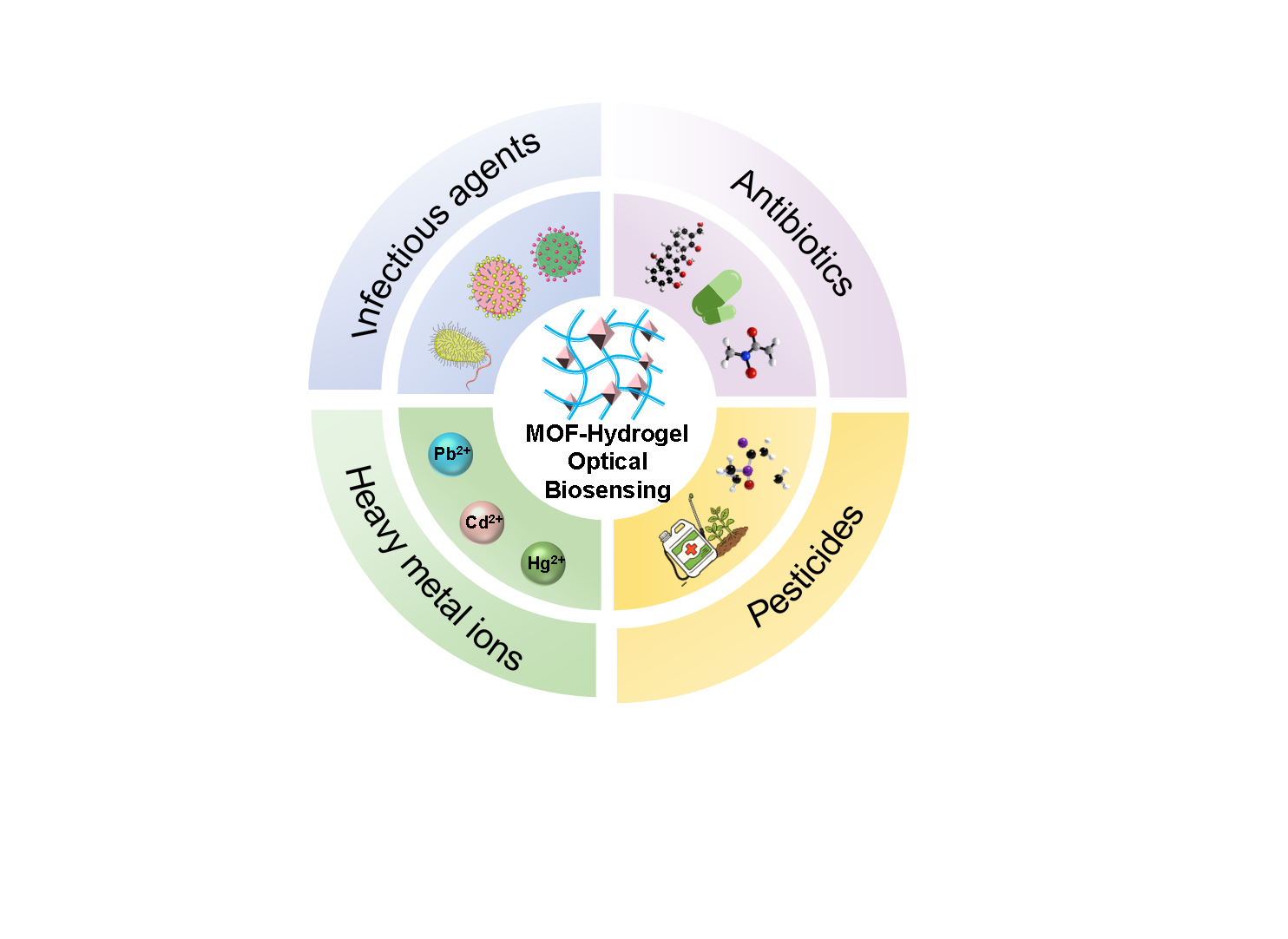
Metal-organic framework–hydrogel (MOF–hydrogel) composites, leveraging their distinctive structural and functional advantages, offer an ideal platform for developing a new generation of optical biosensing technologies for environmental pollutants detection. While conventional analytical methods provide high accuracy, the reliance on bulky instruments and complex operational procedures limits their applicability. This review focuses on design strategies of such composite materials and recent advances in their application to optical biosensing of environmental contaminants. Through approaches such as in situ growth and direct mixing, the structural tunability and catalytic/luminescent properties of MOFs are effectively integrated with the three-dimensional hydrophilic networks and stimuli-responsive characteristics of hydrogels, resulting in synergistic functionality. The review systematically outlines the multifunctional roles of MOFs in sensing, including as luminophores, catalysts, signal modulators, and carriers. Representative applications in detecting pathogenic microorganisms, antibiotics, heavy metal ions, and pesticide residues are categorized and discussed, demonstrating the notable advantages of these biosensing assays in terms of sensitivity, selectivity, and field applicability. Finally, future challenges and research directions are outlined, including improving the environmental stability of materials, developing methods for simultaneous multi-target detection, advancing the portability and intelligence of sensing systems, and expanding the range of applications in environments. MOF–hydrogel composites hold strong promise as a robust material platform for the development of high-performance, field-deployable water quality sensing technologies.
References