Nanozyme-Assisted CRISPR/Cas Biosensing for Environmental Pollutant Monitoring
DOI:
https://doi.org/10.70737/jrxwwd91Keywords:
nanozyme; CRISPR/Cas biosensing; environmental monitoring; pollutantsAbstract
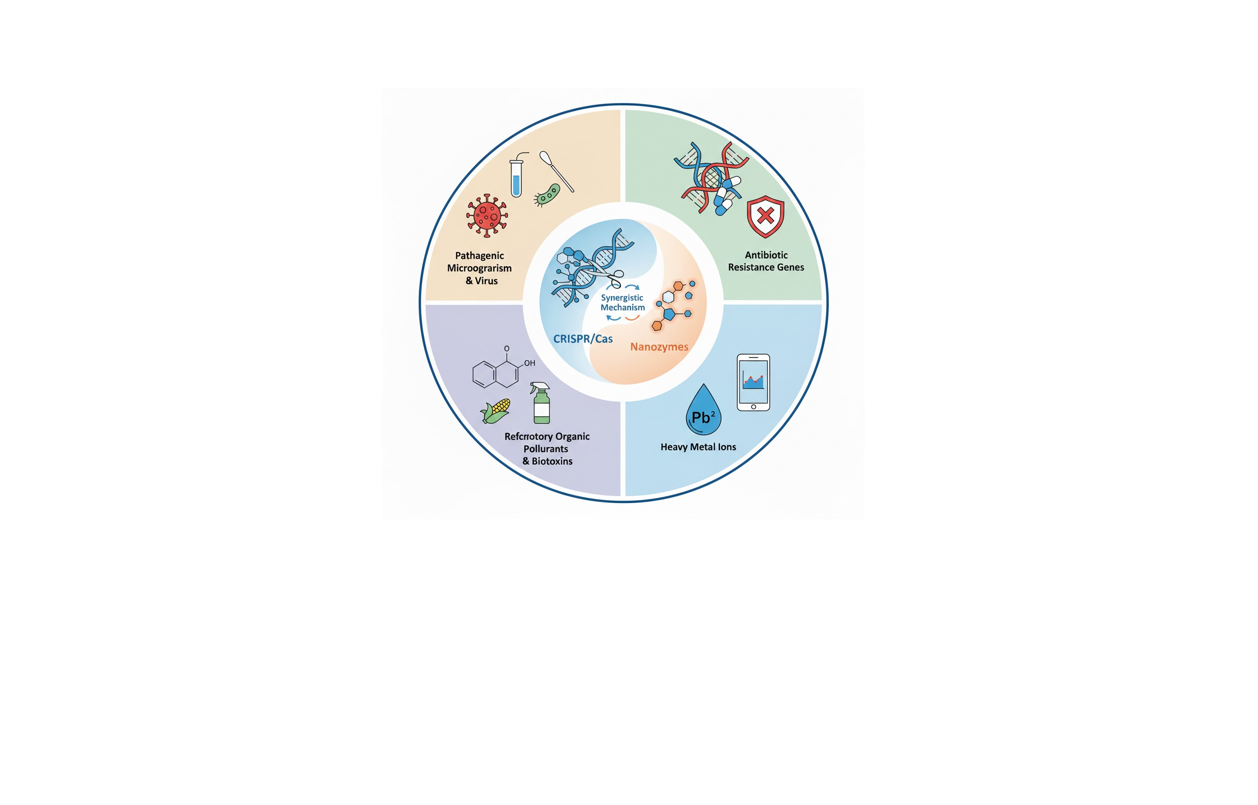
Environmental pollution increasingly threatens human health in concealed forms, such as the spread of pathogenic microorganisms and antibiotic resistance genes (ARGs), as well as the widespread presence of low-concentration small-molecule pollutants in water environments. These evolving challenges demand detection technologies with higher selectivity and sensitivity, making the development of advanced sensing platforms a critical research priority. The CRISPR/Cas system can be rationally engineered to recognize specific nucleic acid sequences, offering significant potential for detecting pathogens and ARGs. Its utility has been further extended to small-molecule sensing through the incorporation of aptamers. Nanozymes, which mimic the catalytic functions of natural enzymes while exhibiting unique physicochemical properties, can substantially enhance the performance of CRISPR/Cas-based biosensors. This review systematically examines the fundamental mechanisms and construction strategies of nanozyme-assisted CRISPR/Cas sensing platforms, details their applications in environmental pollutant monitoring, discusses current challenges and potential solutions for real-world implementation, and outlines future prospects. The aim is to provide valuable insights for further research and practical deployment of this innovative technology.
References