Genome Editing Technologies in Plant miRNA Research: From Functional Dissection to Precision Engineering
DOI:
https://doi.org/10.70737/rse20h76Keywords:
CRISPR/Cas; functional genomics; gene expression regulation; genome editing; non-coding sequences; plant miRNA; precision breedingAbstract
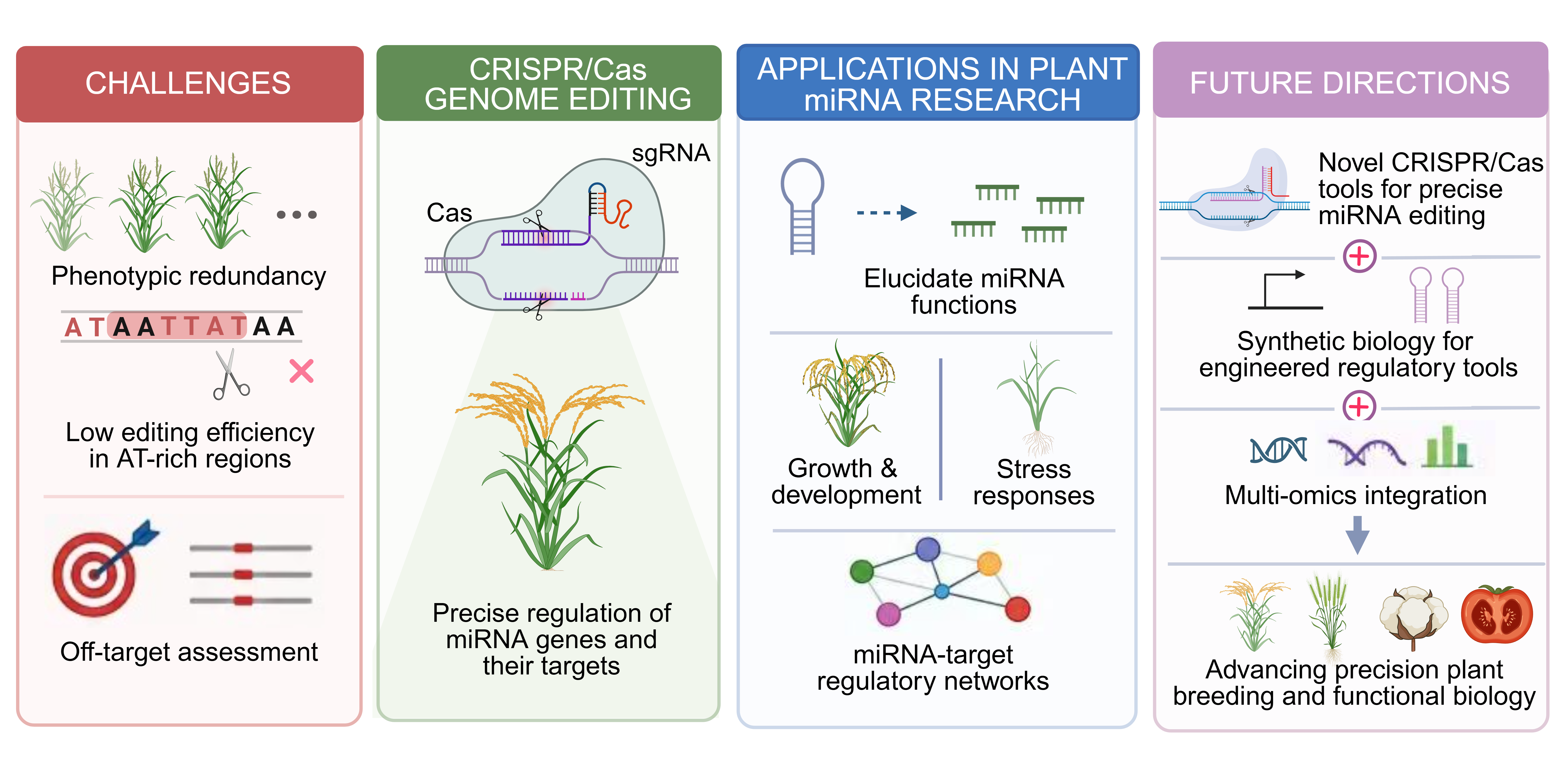
MicroRNAs (miRNAs) are endogenous small non-coding RNAs of ~21 nucleotides that serve as central regulators of post-transcriptional gene expression in plants. Unlike protein-coding genes, MIRs are short non-coding sequences with distinct structural characteristics that pose unique challenges for gene editing, including phenotypic redundancy, low editing efficiency in adenine and thymine-rich (AT-rich) regions, and difficulties in assessing off-target effects. Genome editing technologies, particularly the clustered regularly interspaced short palindromic repeats (CRISPR)/CRISPR-associated (Cas) system, have become indispensable tools in plant molecular breeding and functional genomics. In plant miRNA research, these technologies enable precise regulation of miRNA genes and their targets, facilitating the exploration of miRNA functions in plant growth, development, and stress responses. This review discusses the transformative role of genome editing in plant miRNA research, covering key applications from functional characterization of miRNA genes to engineering of miRNA-mediated regulatory tools, and further explores the potential of novel CRISPR/Cas tools for precise miRNA editing along with the growing trend of integrating gene editing with synthetic biology and multi-omics approaches.
References