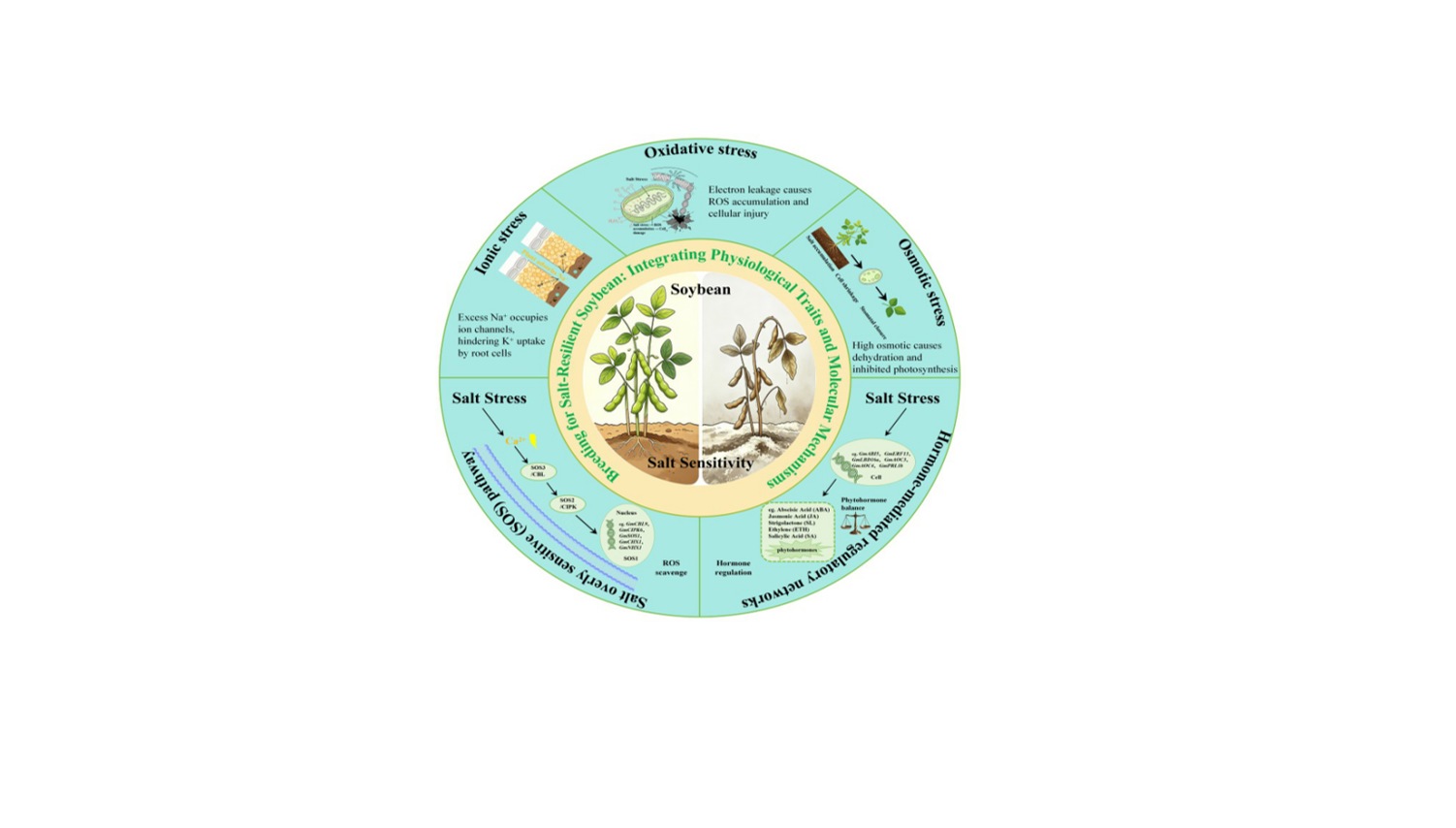
Breeding for Salt-Resilient Soybean: Integrating Physiological Traits and Molecular Mechanisms
DOI:
https://doi.org/10.70737/8avhs053Keywords:
soybean; saline stress; breed cultivation; yield improvingAbstract
As soil salinization becomes increasingly severe, most crops face significant challenges, with soybean being particularly sensitive to salt stress. In saline environments, soybean yields frequently exhibit substantial declines. In recent years, considerable efforts have been devoted to achieving high and stable soybean production in such adverse conditions. Significant progress has been achieved in the breeding of salt-tolerant varieties and in elucidating the signaling pathways and molecular mechanisms underlying soybean salt tolerance. This review systematically outlines the major mechanisms by which plants respond to salt stress, including the Salt Overly Sensitive (SOS) signaling pathway and hormonal regulation of ion homeostasis, with a particular focus on soybean-specific adaptive responses. It summarizes the regulatory roles of over 30 functional genes associated with salt tolerance. Furthermore, it proposes effective strategies to enhance soybean productivity in saline soils, such as improving soil fertility through rhizobial nitrogen fixation, optimizing carbon allocation, and employing seed coating and other pre-sowing treatments to improve plant stress resilience. Additionally, the article discusses the potential applications of cutting-edge technologies, including single-cell omics and gene editing, in accelerating the development of salt-tolerant soybean cultivars. These advances are expected to facilitate the development of more efficient breeding strategies and promote the sustainable development of the soybean industry.
References