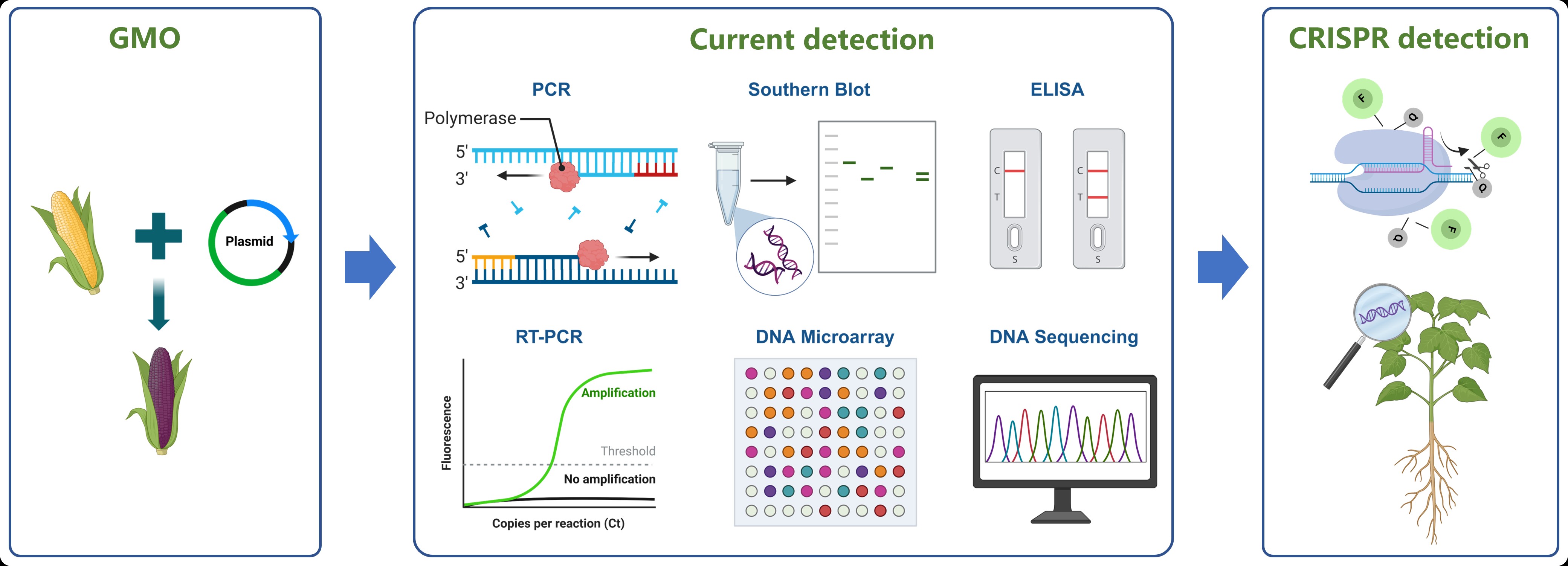
Applications and Prospects of CRISPR Molecular Diagnostics in the Detection of Genetically Modified Crops
DOI:
https://doi.org/10.70737/416nr930Keywords:
genetically modified crops, molecular detection, CRISPR, on-site rapid detection, biosafetyAbstract
Genetically modified (GM) technology plays a pivotal role in improving crop traits, such as enhancing yields and stress resistance. However, as the cultivation area of GM crops continues to expand, biosafety supervision faces increasingly severe challenges, demanding innovative advancements in detection technologies. This review traces the evolutionary trajectory of representative molecular detection techniques and systematically dissects the molecular recognition and signal amplification mechanisms underlying Clustered Regularly Interspaced Short Palindromic Repeats (CRISPR)-based molecular diagnostics. Crucially, we highlight the application potential of CRISPR technology in GM element screening, multiplex detection, and on-site rapid testing. On this basis, future optimization directions and application prospects are discussed, aiming to provide a solid theoretical foundation and technical reference for the biosafety supervision of GM crops.
References