Anthocyanins: Biosynthesis, Metabolism and Functions in Higher Plants
DOI:
https://doi.org/10.70737/zakfvy92Keywords:
anthocyanins; functions; biosynthesis; regulationAbstract
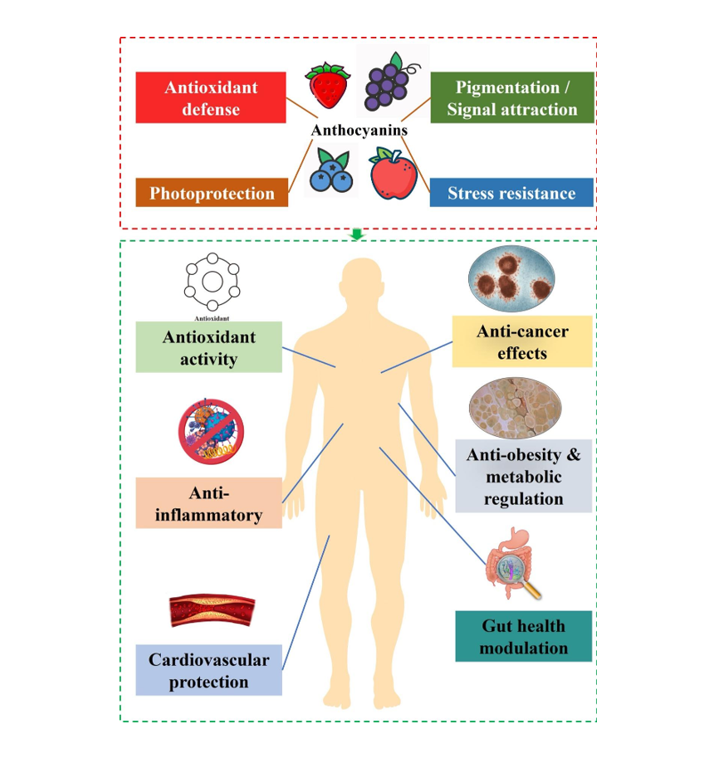
Anthocyanins, a class of water-soluble flavonoid pigments, are widely distributed in higher plants and are responsible for the red, blue, and purple coloration of many fruits, vegetables, and grains. In recent years, growing attention has been paid to their dual biological significance in plants and humans. In plants, anthocyanins play critical roles in photoprotection, stress resistance, and defense against pathogens. In humans, they exhibit potent antioxidant, anti-inflammatory, and metabolic regulatory activities, contributing to the prevention of chronic diseases such as cardiovascular disorders, diabetes, and cancer. These functions are largely mediated through the modulation of key cellular pathways, including NF-κB (Nuclear Factor kappa-light-chain-enhancer of activated B cells), MAPK (Mitogen-Activated Protein Kinase), and PPAR-γ (Peroxisome Proliferator-Activated Receptor gamma). Anthocyanin biosynthesis is tightly regulated by the MYB-bHLH-WD40 (MBW) transcriptional complex, in which R2R3-MYB proteins provide DNA-binding specificity, bHLH factors enhance transcriptional activation, and WD40 proteins serve as scaffolds to stabilize the complex. The activity of this MBW complex is further influenced by both genetic and environmental factors. However, the practical application of anthocyanins is limited by low stability and bioavailability. Emerging encapsulation technologies such as nano-formulation in biopolymer matrices have shown promise in overcoming these limitations. This review comprehensively summarizes recent advances in the biosynthesis, metabolic regulation, and physiological functions of anthocyanins in higher plants, with a particular focus on their molecular mechanisms and potential applications in health-promoting functional foods and plant breeding. Understanding the regulatory networks of anthocyanin biosynthesis and their functional implications provides valuable insight into the development of anthocyanin-enriched crops and nutraceuticals.